
The city of Dhaka is easy to reach by air. You can fly to Dhaka or take a bus to the middle of the city. The bus system is easy to use, and there are a lot of buses. The best way to see Dhaka is on foot since the streets are well-kept and there are many cultural sites to see.
If you want a more luxurious time in Dhaka, you can stay at one of the city's best hotels. The amenities, courtesy cars, and other services at these places are very cheap. If you want to stay somewhere cheaper, you can find places to stay in the city center or in certain neighborhoods.
When it comes to safety in Dhaka, it's important to always be aware of your surroundings and know about the latest threats. You can also go to the website of the Bangladesh Bureau of Police (BBP) to learn about crime rates in Dhaka. Crimestoppers also gives investigators free tips that can help them catch criminals in the act.
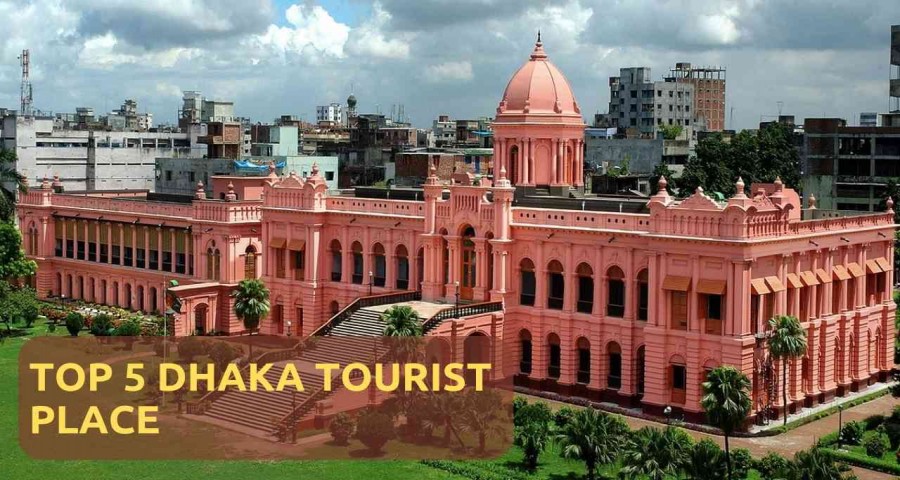
Ahsan Manzil Dhaka is the capital of Bangladesh and is located in the northeastern region of the country. The city was founded by Mir Jafarullah Khan, a general who played an important role in the independence of Bangladesh from India. The city became one of the most important metropolises in East Pakistan after it achieved independence from India in 1971. That's why Ahsan Manzil becomes one of the best tourist place near Dhaka.
When a group of British officers in 1872 decided to set up a military station on the banks of the River Brahmaputra in the area that is today known as Ahsan Manzil Dhaka, the city's history began to take shape. General Mir Jafarullah Khan, a key figure in the East Pakistani independence struggle, was honored with the naming of this position. When the British pulled out of East Pakistan after the end of World War I in 1919, they surrendered authority to the Muslim League Party's Sheikh Mujibur Rahman. Sheikh Mujibur Rahman, the former leader of East Pakistan, lost his position after a dispute with his political associates. There was fighting between those who supported Sheikh Mujibur Rahman and those who wanted to restore British authority in East Pakistan as result of this. After Bangladesh declared its independence from India in 1971, Pakistani armies invaded and seized East Pakistan, sparking a violent struggle that left millions dead or maimed on both sides. Due to its high population of Bangladeshis and the presence of both national and international institutions, Ahsan Manzil Dhaka is still one of East Pakistan's most vital urban centers today.
On a hill overlooking modern-day Dhaka, the Lalbag Fort was constructed by Mahmud bin Qutb-ud-Din Shahi, a commander of the Tanishka dynasty, in 705 AD. Before becoming a museum in 1876, it was used for many years as a royal residence and military fortress. Since 1979, the fort has been recognized as a World Heritage Site by UNESCO. A museum detailing the history of Dhaka's early buildings and culture can now be found within the fort's walls. So we can call Lalbag Fort one of the Best tourist place in Dhaka.
Dhaka is home to a number of notable historical sites, including the Lalbagh Fort, which dates back to the sixth century AD. The fort has served as both a military stronghold and a commercial hub since medieval times. Its exquisite design has also won it a spot among the world's best-preserved medieval fortifications.
The city of Sadarghat is found in Bangladesh's northeast. Several large shopping districts, such as Sadarghat Maryam and Sadarghat Shahjahanpur, can be found inside the city limits. The city's location on the main route between Dhaka and Jessore also makes it a significant transit center.
Sadarghat is a bustling commercial hub brimming with a wide range of companies and industries. Sadarghat is home to a diverse range of businesses, from garment makers to automakers to chemical producers to food processors to the paper sector and even engineering consultants. As a result of its wide selection of high-quality goods and services offered at reasonable costs, Sadarghat's commercial sector has grown in popularity over the years. Markets are more popular than department stores among residents of Sadarghat.
The goddess Durga, also known as Maha Devi, is the focus of worship at this temple. Dhaka is home to a shrine that was constructed atop a massive boulder. Many visitors go to this area of Bangladesh every year.
Amazing works of Buddhist and Hindu art may be seen in the temple's galleries. The temple houses a massive Buddha statue that has been called the biggest and most lifelike sculpture ever made.
Built by Mangat Ray, also known as Ballalasena, younger brother of Arakan monarch Shri Sudharma, son of renowned Arakan ruler Raja Malhana alias Husen Shah, the Dhakeshwari Temple is a 500-year-old Hindu temple that is presently held by the state.
Liberation War Museum Dhaka is a historical museum that focuses on the Bangladesh Liberation War. The Dhaka, Bangladesh establishment opened in 2008 and houses the museum's current collection. The museum displays artifacts from all sides of the conflict to provide a more complete picture of the conflict. Museumgoers may engage with artifacts and learn more about the conflict by using the museum's library and interactive displays.
To learn more about the history of the Bangladesh Liberation War, visit the Liberation War Museum Dhaka (LWM). Dr. Md. A.M. Ahsan, a historian, and professor at Dhaka University established it in 2007 with the goal of informing the people about the conflict and its aftermath.
The LWM examines not only the conflict's military context but also its social and economic history. Exhibits in the museum cover subjects such as Bengali nationalism, liberation struggles, and post-war Bangladesh. There is also a library there for any reading or study needs.
There are a lot of things to do in Dhaka if you want to have a great cultural experience. You can have a unique and unforgettable trip by going to Dhaka and exploring the city's Cultural Heritage. It is also important to stay safe while exploring the Cultural Heritage of Dhaka. If you follow some tips, you can make sure your trip is safe and doesn't cause you any stress.


Prime Asset Group, one of the leading conglomerates in Bangladesh, started its journey in 2011, consisting of Real-estate, Food & Beverage, Air Tourism, and Advertising Agency business, and has become popular & trustworthy among its customers.

© All right Reserved.Prime Asset Group